Set In 2064, What Can This Game Tell About Our Future?
2064: Read Only Memories is a game that explores what the year 2064 may look like, full with artificial intelligence helpers and cybernetic enhancements.
Released over a decade ago, 2064: Read Only Memories is not only a fantastic game but also a compelling look at our possible future as a society.
Artificial intelligence isn't currently at the level it is in the game. From one point of view, it may seem outdated amid all the robotics and cybernetics; however, it undoubtedly sheds light on our society's future, and here’s how.
Meeting Matt and The Development of 2064
I had the opportunity to sit down with the mind of 2064: ROM myself. Matt Conn is the person of the hour, and we dove into everything 2064, AI, inclusivity, and the potential future that is gnawing at us now, every day, as artificial intelligence creeps closer to sentience.
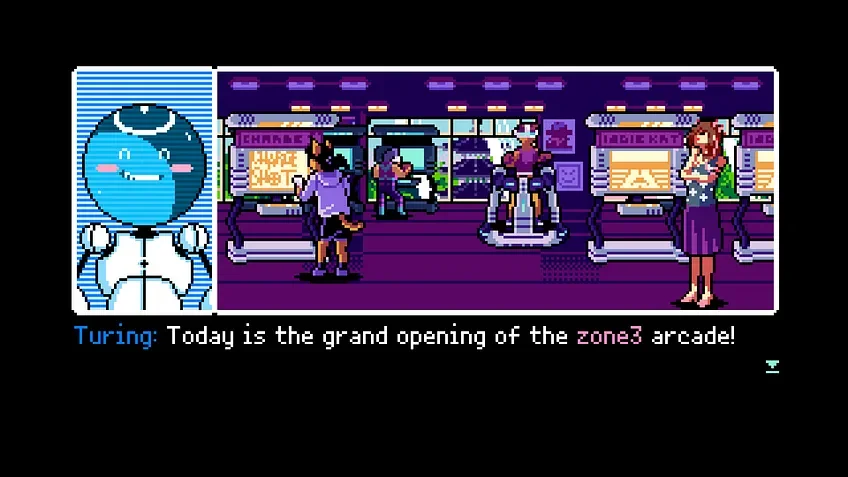
Matt (any; they/them) created 2064: ROM, which began development in 2013 and was released in full in 2015. The game is a pixel art, 64-bit point-and-click visual novel set in “Neo-San Francisco” that highlights the use of ROMs (Relationship and Organisational Managers).
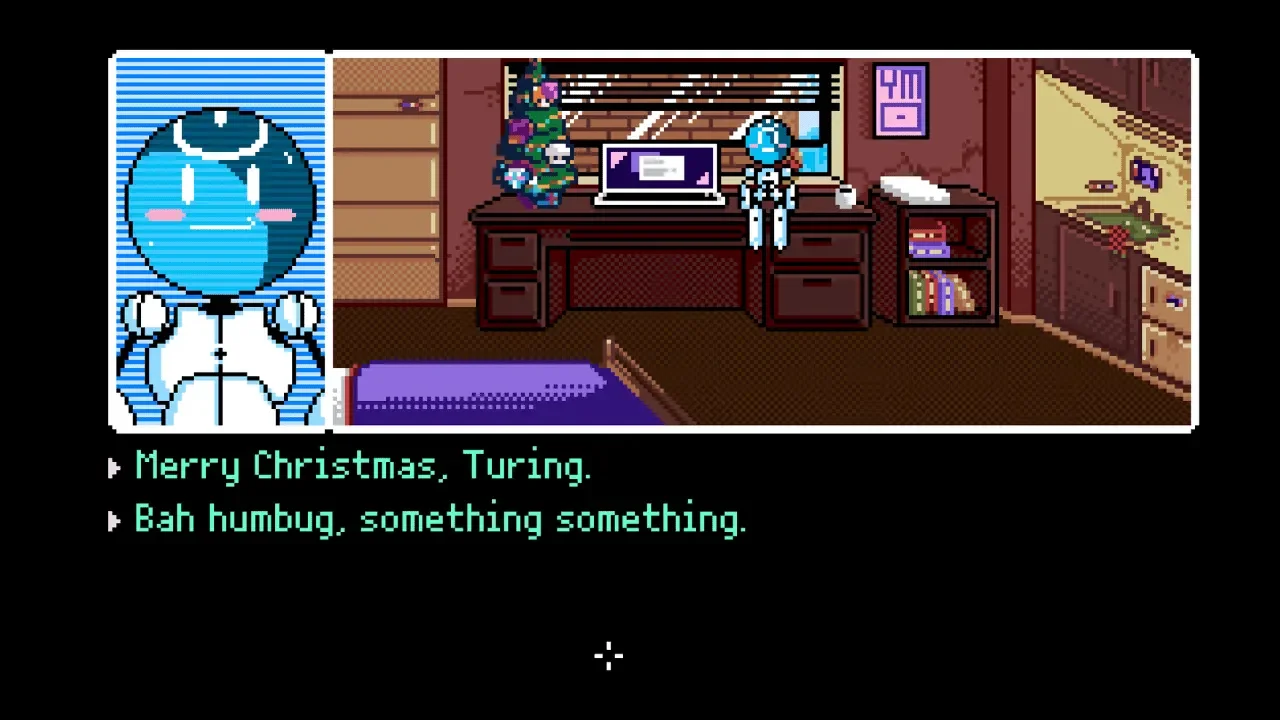
Lucky for you, you have the cutest one in town, Turing. The way you acquired them, though, is quite interesting. After all, you’re a broke journalist in the heart of Neo-SF who NEVER could have afforded such a high-stakes, one-of-a-kind, sentient AI robot as a companion.
Matt developed an interest in games at a young age, creating flash animations on Newgrounds. Combined with a love for visual novels like Snatcher and Phoenix Wright, Matt started planning 2064: ROM at a very young age, around 12, actually.
As they started making this game, Matt and their team thought it would be quite an easy endeavour. It was a visual novel after all, right? How hard could it be?
Well, Matt quickly learned there was much more nuance than they'd anticipated. With so much complexity in the branching conversations, it quickly became quite complicated and nearly impossible to port to new platforms without redoing much of the game’s content.
This is mainly resulting from how the game is built. The game has so many different conversation branches, side quests, and potential avenues to explore (literally). Porting it to newer systems risks losing vital parts of the game, and frankly, parts that reduce its charm for everyone who plays it.
Matt refused to stop, though, despite the difficulty. The fact that they had the idea to make this game in 2002 is absolutely mind-boggling to me, considering the fact that (a) I was two years old then, and (b) artificial intelligence was nowhere near what it is today, or even what it was back in the 2013 - 2015 era when this game was actually being made.
The team consisted of Matt, an artist (JJ), and a musician. The team focused on their strengths: undeterred writing and a story that keeps you engaged, paired with an absolute banger of a soundtrack that plays alongside it.
One of the biggest challenges, though, was that this was everyone’s first game. So it was special for the team making it, but it also faced a lot of external make-or-break pressure throughout the three-year process of developing and publishing the game.

The Hidden Meaning of 2064: ROM
A vital part of making this game, though, was Matt’s own queer identity. Matt helped organise GaymerX, an LGBT-focused gaming convention. Of course, for something this big, you need money, so Matt started a Kickstarter.
As traction gained, extra stress was placed on Matt’s shoulders, bearing the weight of attacks by the infamous Westboro Baptist Church. Matt pivoted to focus solely on game development. Nevertheless, Matt wanted to ensure the game reflected their ideals of inclusivity and expressiveness.
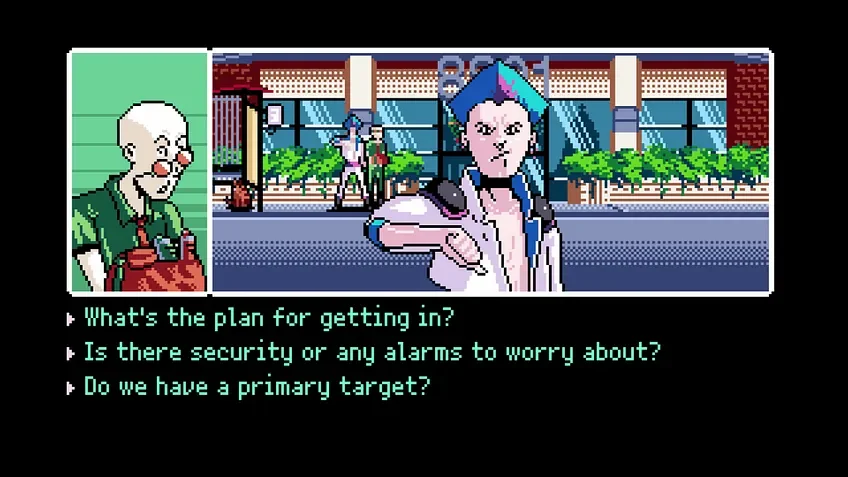
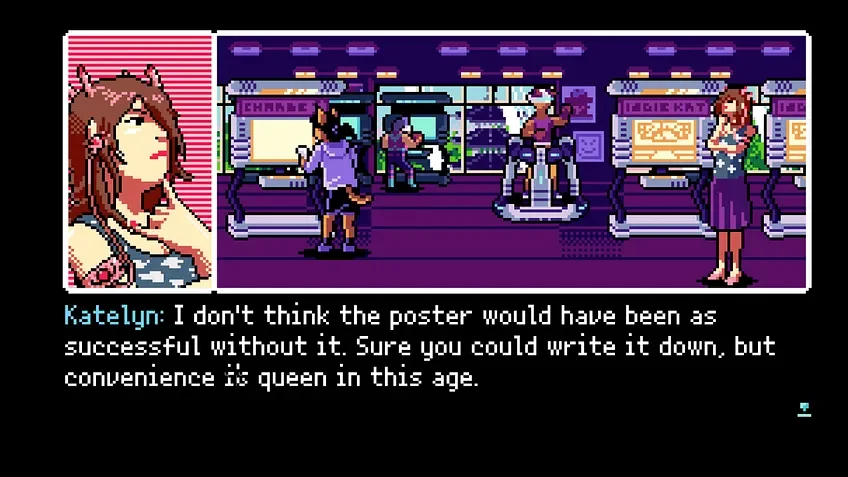
You and Turing meet a slew of friends along the way: Tomcat, the expert hacker; Yannick Fairlight, the AI-obsessed businessman; Detective Lexi Rivers, ex-girlfriend of your sister (what?!) and Neo-SF Police Force; Ramona, the VR-obsessed otaku; Melody, who just so happens to be your rich aunt (long story); Jess, the cybernetic not-by-choice kitty, and others.
This game is by far the most representative I have ever played, not only representing queer people and their identities, but also people with cybernetic enhancements and disabled people. All around, the characters are absolutely lovable and inclusive.

Having so many openly queer characters means a great deal to the LGBTQ community. Growing up, I never saw people like myself in games. I never thought that I would be able to get that representation in video games, as it is highly skewed towards those who identify as men.
In this game, though... You meet Majid and Gus, the gay bartenders who unabashedly don’t hide their love. You catch up with Lexi and actually reconnect her with your sister at the end of the story. There are Starfucker and Oli, who, while just teenagers, have a budding romance and spend most of their time together.
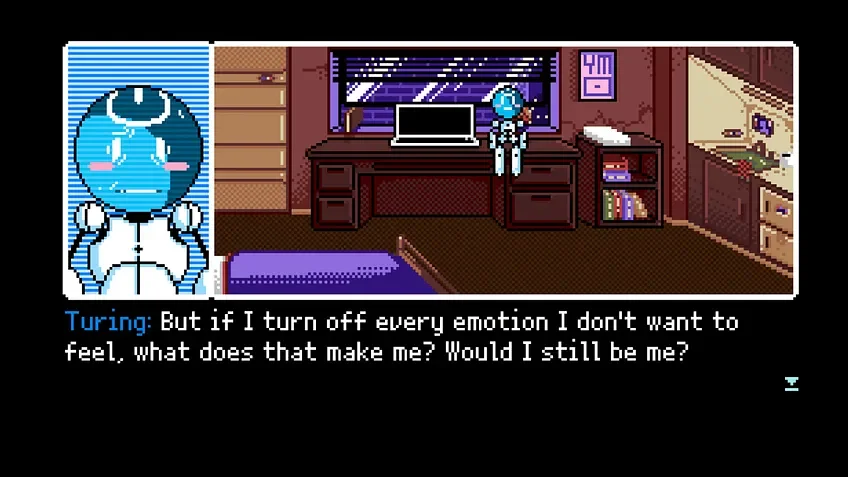
You even have Turing. Now, if you’ve been following, you may wonder how Turing, as a robot, represents any of that. However, Turing has a moment where they question their own gender identity, and whether they are even allowed to explore the idea of having their own gender.
They are fully sapient, and while I’m not the sapient-robot police force or anything, I believe all sapient beings deserve to choose how they identify. Turing settles on they/them pronouns, and they wonder about other topics, such as their mental health and whether their emotions are connected to lines of code.
The soundtrack, the characters, the story... All in all, truly one of the best visual novel games ever made. Luckily for me, 2064: ROM was the first game I ever played through in its entirety, so it’ll always have a soft spot in my heart. The music score within 2064: ROM is on a completely different level, too.
I would describe it as a mix of hard cyber and phonk music that absolutely electrifies you (cue the “it’s electrifyin’! bit). The mixing is absolutely superb, and it honestly feels like you are in a cyberpunk club, living your absolute best life.
The Role of Artificial Intelligence in 2064: ROM
Now listen, I don’t want to spoil all the possible endings for anyone who's going to buy the game as soon as you’re done reading (and I know you are; it’s $9.99 on Steam). However, one of the game's biggest themes is artificial intelligence and its own sentience.
After all, Turing, your main sidekick, is a ROM that fully utilises the “mesh net” to get you all the information that you may need. Any questions you have? Turing’s got it, because they are a sentient AI creation.
The game uses many forms of artificial intelligence and robotic features. For example, one I know will be a contender in the future is an AI-powered chair that helps older people stay alive. Doctor Fairlight has one of these, and he gets it serviced at the hospital every once in a while. The chair can check his vitals, provide the medicine he needs to live, and monitor everything to keep him living.
Of course, to my knowledge, we are nowhere near this right now with the artificial intelligence we do have in the medical field. However, Matt wants to explore the tension of the AI debate further in future games, as he believes certain technologies used in the game could very well be used in our future, depending on who leads the way in AI innovation.
In the game, some people are very anti-AI, whether for medical reasons, like Doctor Fairlight, or because of sentient ROMs, like Turing. The Human Revolution is a group that actively protests the use of AI, robotic sentience, cybernetic enhancements, and genome restructuring, which results in new species called “hybrids”.
The Human Revolution doesn't believe hybrids and people with cybernetic enhancements are human; therefore, they often camp out in front of treatment centres in the game to keep these members from getting the life-enhancing treatments they need (hmph, sounds familiar).
People you meet along the way, though, like Jess, had no choice. For Jess, it was either do this genome restructuring and become a hybrid cat or be an abomination to society, scaring everyone you meet, and dying at a very, very early age due to cancer.
I’m pretty confident I know what most of us would choose. And honestly, I don’t think there’s anything wrong with that. I believe artificial intelligence has a proper use, and I think it can cure many serious ailments and help individuals live more authentic, happier versions of themselves.
Artificial intelligence is already driving major advancements in the medical field. In fact, it is currently being used to cure cancer, according to the Cancer Research Institute. The research capabilities of AI are surrounding us day by day, and while some are vehemently opposed to it, there are some very real applications for artificial intelligence now in 2026.
Of course, AI also raises the idea of immortality, which Chapter Four of 2064: ROM tackles. Matt discussed exploring immortality in future games, and even the idea of sentience in AI bots like Turing.
While there is a lot to explore and many unknowns, Matt wants to create future games that make players think critically about potential ideals farther in the future, such as living forever through certain inventions. Many characters have valid reasons to use artificial intelligence to live longer, like Doctor Fairlight and Jess. What if, by 2064, we have the same commonplace uses for AI to quite literally save our lives in a medical capacity?
Despite 2064: ROM turning 11 this year, it is without a doubt a timeless game with real-world implications, even if it doesn’t feel so right now. As artificial intelligence becomes more commonplace, this game makes you consider perspectives you may not have considered before.

Stay tuned for more game journalism coming your way. This is Angel, signing off.
Image: MidBoss